I started to read this book after many years of waiting in January 2026. I first saw the physical copy of it being sold by 200+ reais around 5 or 10 years ago. As I’m reading it, I’m adding my notes taken during it.
Author Website: Christopher Totten
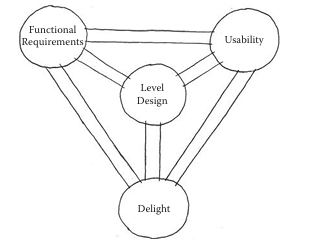
The book start talking about Vitruvius, a roman architect that proposed in his book some principles that are relevant until today and should be considered to construct any environment in a game. Those principles are equally important for level design that is being proposed today:
-
Functional Requirements : “First and foremost, your game must work. This is the firmitas of level design.”
-
Usability: “Gamespaces must be usable. In this way we should concentrate on how players see gamespace through points of view and game cameras and how one navigates levels. This element of level design concentrates on navigation and teaching. As we will see, levels are an opportunity for game designers to have an indirect conversation with players. As such, our game levels should teach players how to use themselves and speak in easily understood language.”
-
Delight: “Our gamespaces should rewarding to go through. For this we must engage the psychological elements of level design and understand how levels guide players through emotional experiences”
The Beginnings of Architectural Sight Lines
The author comments that even on early stages, like when the Stonehenge was construct, the architects and designers of those space already used sight lines to direct the attention from their occupants.